
Table of Contents
Quitting smoking is one of the hardest goals many adults ever attempt — not just because of nicotine’s chemical pull, but because of the rituals wrapped around it. In 2025, an entirely new category of products has emerged for that “after-nicotine” phase: nicotine free vapes. But the big question remains — can vaping with zero nicotine actually help you quit for good, or is it just flavored vapor without function?
This guide breaks down what the strongest research actually says. You’ll learn where 0 mg vapes truly fit into a quit plan, where they fall short, and how evidence-based tapering works. You’ll also find expert insights, practical step-down phases, and a few recommendations for the best zero nicotine vapes that can make the transition smoother.
Let’s separate habit from hype — and see how nicotine-free vaping really stacks up as a quitting strategy.
What “Nicotine-Free” Vaping Actually Does
To understand why nicotine free vapes appeal to so many people, you need to look beyond chemistry. For many ex-smokers, the hardest part of quitting isn’t nicotine itself — it’s the behavior. The hand-to-mouth rhythm, the visible vapor cloud, even the quick exhale all signal comfort and control. A 0 mg vape keeps that ritual alive while removing the addictive compound.
Modern disposables and pod systems designed for 0 mg liquid replicate nearly every sensory cue of smoking. You still feel a faint “throat hit” (depending on the flavor formulation), and the visible vapor satisfies the eye-to-brain feedback loop that smokers crave. That’s why behavioral psychologists call vaping “habit substitution.”
However, nicotine-free options do not blunt withdrawal symptoms. If you’ve relied on nicotine for years, those first few days on 0 mg will still test your willpower. You may experience cravings, restlessness, and irritability. That’s normal — and it’s why experts rarely recommend starting a quit attempt with 0 mg right away.
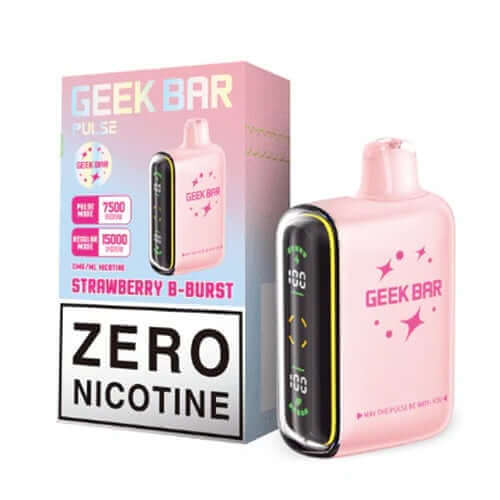
When used correctly, though, zero-nicotine vapes help retrain your mind and hands to break the automatic cycle. They let you keep your familiar gestures while your body adjusts to life without nicotine. Brands like Geek Bar Zero Nic, ARRØ Ultra X 40K Zero, and NONIC 25KZero are purpose-built for this phase — smooth airflow, realistic vapor production, and flavor that rewards without dependency.
What the Strongest Evidence Says (in Plain English)
The most trusted reviews on smoking cessation consistently find one thing: nicotine-based vapes outperform both traditional nicotine-replacement therapy (NRT) and nicotine-free versions — at least for the first six months of quitting.
- The Cochrane Review (2024 update) examined over 80 studies and found that people who switched to nicotine vapes were about twice as likely to stay smoke-free at six months compared with those using patches, gums, or no support at all. Meanwhile, zero-nicotine vapes showed no measurable improvement over quitting unaided.
- The CDC’s summary echoes that finding: smokers using nicotine e-cigarettes show higher quit success than those using 0 mg or nothing. Still, the agency emphasizes that no vaping product — nicotine or otherwise — is officially approved as a smoking-cessation therapy in the U.S.
- The NHS (U.K.) guidance adds nuance: vaping can help when it replaces smoking entirely. The strategy should always include a plan to reduce nicotine gradually, eventually moving toward nicotine-free options and then stopping completely.
Put simply, science supports vaping with nicotine as a bridge off cigarettes, not vaping without nicotine as a cold-turkey substitute. The best zero nicotine vapes are valuable once you’ve already crossed that bridge — when you’re stabilizing the behavioral side of addiction, not the chemical one.
Where Zero-Nicotine Fits (and Where It Fails)
- Where it fits best: after you’ve already quit smoking and replaced cigarettes with a nicotine-containing vape. At that stage, switching to 0 mg helps dissolve the final thread of dependence. You still get the motion, taste, and satisfaction — without reinforcing the chemical craving.
- Where it fails: starting from zero as a smoker. That’s effectively “cold turkey with clouds.” You’ll still crave nicotine, and the absence of it can make relapse more likely. Studies show the highest success rates when smokers first transition to a nicotine vape and only later move to zero-nicotine products.
Think of 0 mg devices as part of the finishing line, not the starting gun. Used too early, they frustrate more than they help. Used at the right time, they’re a powerful psychological bridge between dependence and freedom.
Pro tip: Don’t rush the process. Once you’re comfortable on a low-nicotine pod (like 3–5 mg), step down to a 0 mg disposable from the best zero nicotine vapes collection. You’ll maintain the rhythm while your body finalizes its adjustment.
A Practical Taper Plan (Evidence-Aligned)
Experts agree: quitting nicotine is easier when you treat it as a sequence, not a single leap. Here’s a realistic, research-aligned plan built around both chemistry and behavior.
Phase 1 — Switch Fully to Vaping (with Adequate Nicotine)
Start by replacing every cigarette with a vape session that actually satisfies cravings. A mouth-to-lung (MTL) pod or pen device works best because it mimics cigarette draw. Match the nicotine strength to your current habit — 20 mg for heavy smokers, 10 mg for moderate ones. Avoid “dual use” (smoking and vaping together); it delays progress and keeps your receptors dependent.
Phase 2 — Step Down Gradually
Once you’re stable, begin reducing your nicotine level every few weeks. Drop in small increments: 20 mg → 10 mg → 5 mg. Observe how your body reacts. If withdrawal spikes, pause before stepping further. Support your taper with hydration, mild exercise, and short breathing breaks whenever a craving hits.
Phase 3 — Go 0 mg
Now transition to nicotine-free products. Keep the same flavors or try new ones to refresh your palate — fruit, mint, or dessert profiles work well for many. This is where nicotine free vapes shine. They sustain the ritual and sensory satisfaction while your body functions entirely without nicotine. Most users stay in this phase for 2–6 weeks.
Phase 4 — Quit Vaping Altogether
Once vaping becomes routine rather than relief, it’s time to let it go. Set a firm date, gradually reduce daily use, and remove triggers like after-meal or driving puffs. Replace those moments with deep breathing, gum, or mindfulness cues. If cravings persist, call 1-800-QUIT-NOW or talk with a healthcare provider about supportive medications such as varenicline or cytisinicline.
| Phase | Goal | Recommended Device Type | Nicotine Level | Notes |
|---|---|---|---|---|
| 1 | Replace smoking | MTL pod system | 20 mg | Satisfy cravings completely |
| 2 | Reduce dependency | Pod or disposable | 10 – 5 mg | Lower strength gradually |
| 3 | Remove nicotine | Zero-nicotine disposable | 0 mg | Keep ritual only |
| 4 | Quit vaping | None | — | Behavioral focus |
Risks and Realities (Balanced View)
While vaping is widely considered less harmful than smoking, “less harmful” isn’t the same as harmless. Aerosol from e-cigarettes contains far fewer toxicants than combustible smoke, but still carries trace metals and flavoring chemicals that can irritate lungs. The CDC notes that long-term data remain limited because vaping is a relatively new behavior.
- Youth caution: Even nicotine-free products shouldn’t appeal to teens or non-smokers. Behavioral dependence can still develop, and mislabeled products may contain residual nicotine. The National Institute on Drug Abuse warns of youth initiation risks and potential gateway effects.
- Label accuracy matters. A 2025 analysis by Herb Magazine found several “0 mg” liquids containing measurable nicotine. Stick with reputable vendors who test and publish results for their nicotine free vapes. Transparency ensures you’re truly nicotine-free when you think you are.
Finally, remember that “vape safety” also depends on hardware quality. Cheap knockoffs may leak, overheat, or deliver inconsistent vapor. Choose authentic devices from trusted retailers and check for batch authentication codes before use.
Expert and Medical Perspectives to Know
Public-health organizations have refined their messaging over the past decade. None officially endorse vaping as a first-line quit method, yet most acknowledge it as a lower-risk alternative for smokers who can’t quit otherwise.
- MedStar Health: Complete switching is key — dual use negates benefits.
- National Institute on Drug Abuse: Harm reduction may help adults who fail with conventional treatments. The end goal remains abstinence.
- Clinical consensus: Combine behavioral counseling with nicotine-taper strategies for the highest success rates.
From a harm-reduction lens, vaping is seen as a continuum: burning → vapor → nothing. Each step eliminates more toxic exposure. In that framework, zero-nicotine vaping is the penultimate stage — a short-term behavioral buffer before complete freedom.
“Quitting nicotine isn’t a single act — it’s a sequence of substitutions that narrow until there’s nothing left to substitute.”That mindset transforms quitting from a cliff jump into a staircase. The best zero nicotine vapes occupy the final step of that staircase, giving you balance before the exit door.
Conclusion / CTA
The data tell a clear story: to quit effectively, start with adequate nicotine to replace cigarettes, then gradually taper until you reach zero — and finally, stop vaping altogether. The journey isn’t instant, but it’s measurable and achievable.
That’s where nicotine free vapes play their part. They’re not magic, but they’re meaningful — the tools that let you unlearn smoking’s muscle memory without reigniting its chemistry. Whether you choose a compact pod or a high-capacity disposable from the best zero nicotine vapes collection, use it purposefully and temporarily.
Need more support? Pair your taper plan with professional counseling, local quit programs, or national resources like 1-800-QUIT-NOW. Quitting isn’t a single decision — it’s a series of smaller ones that, over time, become your new normal.
You’re not quitting overnight — you’re upgrading your approach. Start informed, step down smart, and breathe easier knowing the next inhale doesn’t have to include nicotine.
FAQs
Can I quit cigarettes using only 0 mg?
Possible, but uncommon. Most people need initial nicotine replacement to calm withdrawal before 0 mg becomes sustainable. Evidence shows lower quit rates when starting with zero-nicotine products alone.
How long should I stay on 0 mg before stopping?
Two to six weeks is typical. That’s long enough to retrain your habits yet short enough to prevent vaping from becoming its own dependency. Adjust based on your cravings and daily routines.
Are 0 mg vapes safe?
They’re safer than smoking if they keep you away from cigarettes, but not risk-free. Vapor still contains trace chemicals. Treat 0 mg as a temporary bridge, not a forever device.