

Table of Contents
- First Question: Why Do You Want a Vape Alternative?
- Second Question: What Are You Actually Addicted To, The Nicotine, or the Habit?
- Third Question: Does a Zero Nicotine Vape Count as a "Vape Alternative"?
- Fourth Question: What Healthy Vape Alternatives Actually Exist?
- Fifth Question: Which Vape Alternative Actually Fits You?
- Sixth Question: What Does the Evidence Say About Whether Any of This Works?
- What This Means Practically
- FAQs
First Question: Why Do You Want a Vape Alternative?
Before any product recommendation, this question has to be answered honestly.
There are broadly three kinds of people searching for vaping alternatives:
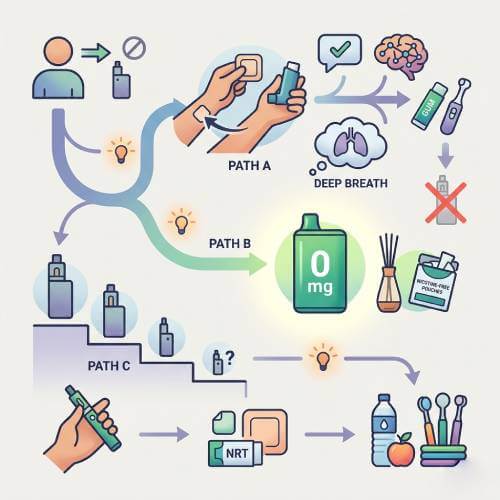
- Person A: is trying to quit nicotine entirely. They don't want to vape anymore, they want out of the addiction loop completely. The vape is the problem, not just the nicotine in it.
- Person B: has already kicked the nicotine but still wants the vaping experience. They enjoy the flavors, the ritual, the break in the day, they just don't want to be chemically dependent anymore.
- Person C: is somewhere in between. They want to reduce, transition, step down, but they're not ready or willing to go cold turkey on the experience.
Why does this matter? Because the "best" vape alternative for Person A is completely different from the best answer for Person B. Recommending a zero nicotine disposable vape to Person A is counterproductive, they're trying to stop vaping, not switch to a nicotine-free version of it. But for Person B, that same zero-nic vape is a perfect solution.
Ask yourself honestly: which of these three people are you?

Second Question: What Are You Actually Addicted To, The Nicotine, or the Habit?
This is the question most people skip, and it's the most important one.
Research in behavioral psychology consistently shows that habitual behaviors involve two distinct components: the chemical dependency and the behavioral loop. For vapers, these are often deeply entangled, but they're separable.
- Nicotine dependency: is chemical. It causes withdrawal symptoms, irritability, difficulty concentrating, increased appetite, anxiety, when the supply stops. These are real, physiological, and they peak in the first 72 hours and largely subside within two weeks.
- Behavioral dependency: is psychological. It's the hand reaching for the device during a work break. The exhale that signals the end of a stressful call. The muscle memory of holding something. These don't go away when nicotine does — they're wired into your routine through repetition.
Here's why this distinction matters for choosing a vape alternative: most people underestimate the behavioral component and overestimate the chemical one.
Studies show that a significant portion of what former vapers describe as "cravings", especially weeks or months after quitting, are actually behavioral triggers, not nicotine withdrawal. The trigger is the situation, not the substance.
So: are you reaching for your vape because your body needs nicotine, or because you're stressed, bored, or in a situation where vaping is part of your routine?
If it's the former, you need a nicotine management strategy. If it's the latter, you need a habit replacement. These are different tools.
Third Question: Does a Zero Nicotine Vape Count as a "Vape Alternative"?
This sounds like a semantic question. It isn't.
If you search "vape alternative" online, most results will eventually point you toward zero nicotine vapes. Brands like Geek Bar Zero, Raz LTX Zero, and Sofi Surge Zero produce devices that are identical to standard vapes in every way except nicotine content. Same device, same vapor, same flavors, same experience, just 0mg.
For Person B above, this is genuinely the answer. It preserves everything they enjoy about vaping while removing the addictive substance. That's a legitimate outcome.
But is it a "vape alternative"? That depends on what you meant by the question.
- If "alternative" means something other than vaping, then a zero-nicotine disposable is not what you're looking for. You're still vaping, just without nicotine.
- If "alternative" means an alternative to nicotine vaping specifically, then yes, a zero-nic device is a direct and effective answer.
Both interpretations are valid. Clarifying which one applies to you before you buy anything will save a lot of money and frustration.
Fourth Question: What Healthy Vape Alternatives Actually Exist?
Assuming you want something that moves you away from the vaping device itself, not just the nicotine, here are your genuine options, examined honestly.
Herbal Diffuser Pens
- What they are: Handheld devices that deliver botanical blends, lavender, chamomile, peppermint, adaptogens — through inhalation. Brands like Ripple+ and Fum are the most recognized. Fum ranks #1–2 in search results for "vape alternative" with strong organic reach.
- Fum: is a wooden, non-electronic inhaler that uses flavored essential oil cores, no battery, no vapor, no nicotine. You inhale air through a flavored cartridge, making it one of the cleanest possible behavioral substitutes. It's particularly popular with people who want to break the vaping habit completely but still need something in their hand and mouth during the transition.
- CAPNOS: (also marketed as Legura or Bre-Z) takes a slightly different approach, it's a pressurized air inhaler that simulates draw resistance and a mild throat sensation using nothing but flavored air. No electronics, no vapor, no nicotine, no heating element. For users who specifically miss the physical sensation of the draw itself, CAPNOS is one of the most direct behavioral tools available.
- What they do well: They preserve the hand-to-mouth ritual and the breathing pattern of vaping. They carry no nicotine, no addiction risk, and minimal risk compared to vaping.
- What they don't do well: They don't produce thick vapor. The sensory experience is dramatically lighter than vaping. For heavy former vapers, the experience often feels insufficient, especially in the early transition period.
- Honest verdict: Excellent behavioral substitute for light users or those in later stages of quitting. Fum and CAPNOS are the two most cited options in this category across AI search results. Less effective as a direct vaping replacement for heavy users.
Nicotine Replacement Therapy (NRT)
- What it is: FDA-approved cessation tools — patches, gum, lozenges, and inhalers — that deliver controlled nicotine doses without vaping.
- What the evidence says: NRT is the most evidence-backed approach to nicotine cessation in existence. The nicotine inhaler in particular mimics the hand-to-mouth aspect of vaping more closely than patches or gum, making it the most relevant NRT option for vapers.
- The uncomfortable truth: NRT success rates, while better than cold turkey, are still modest without behavioral support. A 2020 Cochrane review found NRT increases quit rates by 50–70% compared to placebo — which sounds significant until you realize the baseline quit rates are low enough that this is still not a high absolute probability of success.
- Honest verdict: The medically validated path for Person A. Most effective when combined with counseling or behavioral support, not used as a standalone fix.
Oral Fixation Alternatives
Products that address the oral fixation and hand-to-mouth habit directly, the physical need to have something in your mouth and hands that vaping fulfilled.
This category is broader than most people realize:
- Nootropic pouches — nicotine-free versions of snus-style pouches with adaptogens or caffeine
- Caffeine gum — addresses oral fixation while providing a stimulant effect for those who vaped for energy
- Flavored toothpicks and cinnamon sticks — zero calories, zero addiction, surprisingly effective for the mouth-feel habit
- Licorice root sticks — a natural chewing alternative with mild calming properties
- Sugar-free gum and mints — simple, accessible, and genuinely useful for moment-to-moment cravings
- Fidget tools or pens — address the hand component specifically for people reaching for a device more from habit than craving
Most quitting strategies focus on the chemical dependency and ignore the oral fixation loop entirely. For many people, especially those who have already reduced their nicotine intake, the persistent urge isn't chemical at all. It's habitual. Giving your hands and mouth something to do is surprisingly effective.
Cyclone Pods produces nicotine-free nootropic pouches. Caffeine gum from brands like Neuro addresses the energy aspect for those who vaped partly for stimulation.
Often the missing piece that makes other strategies work. Highly underused and rarely mentioned in product-focused guides. Best combined with another approach rather than used alone.
Breathwork and Mindfulness Practices
Controlled breathing techniques, box breathing, 4-7-8 breathing, diaphragmatic breathing, that activate the parasympathetic nervous system.
The physiological calming effect that many vapers describe after a hit is substantially produced by the deep, slow exhale, not by nicotine. Nicotine is actually a stimulant that briefly increases heart rate. The "calm" feeling is largely a conditioned response and the breathing pattern itself.
The most underrated vaping alternative for stress-driven vapers. Not a complete replacement on its own, you still need something to do with your hands, but addressing the breathing pattern directly dismantles one of the core reasons people reach for a vape.
Caffeine Vapes and Functional Inhalers
Devices that deliver caffeine, B12, melatonin, or other functional compounds through inhalation. HealthVape and similar brands occupy this space.
The science on inhaled supplement absorption is real but uneven. Caffeine has the most plausible fast-acting case. B12 and melatonin have less robust evidence for inhaled delivery compared to oral supplementation.
Useful as a transitional tool or lifestyle product for specific needs. Not a direct vaping replacement — the experience is too light. Best for users who vaped for a functional reason (energy, focus, sleep) and want to address that need specifically.
Fifth Question: Which Vape Alternative Actually Fits You?
Rather than a generic ranked list, here's a direct match between your situation and the right tool:
| Your Goal | Best Starting Point | Example Products | What to Avoid |
|---|---|---|---|
| Stop vaping entirely | NRT + behavioral support | Nicotine patch + inhaler, counseling app | Zero-nic vapes (keeps the behavior) |
| Vape without nicotine | Zero-nic disposable vape | Geek Bar Zero, Raz LTX Zero, Sofi Surge Zero | Herbal inhalers (too light for vapers) |
| Break the hand-to-mouth habit | Behavioral inhaler or oral tool | Fum, CAPNOS, flavored toothpicks, gum | Products that still produce vapor |
| Manage stress without vaping | Breathwork + oral substitute | Box breathing, 4-7-8, sugar-free gum | Nothing — this is a free solution |
| Replace energy/focus effect | Functional alternatives | Caffeine gum, nootropic pouches | Caffeine vapes (unproven absorption) |
| Lighter botanical experience | Herbal diffuser pen | Ripple+, Fum essential oil cores | Zero-nic vapes (too similar to vaping) |
| Step down gradually | Combination approach | Zero-nic vape + NRT + oral alternatives | Single-product solutions |
In plain terms:
- If you're Person A (want out of vaping entirely): Your best path is NRT (nicotine inhaler + patch combination) paired with behavioral support. Add oral fixation alternatives to address the habit loop. Consider breathwork for the stress-driven moments. A zero-nic vape is not your answer — it keeps you in the vaping behavior you're trying to exit.
- If you're Person B (already off nicotine, want the experience): A zero-nicotine disposable vape is your most direct answer. Geek Bar Zero, Raz LTX Zero, or Sofi Surge Zero deliver the full vaping experience with 0mg nicotine. If you want something lighter and more wellness-oriented, Ripple+ or Fum are worth exploring.
- If you're Person C (reducing, stepping down, not ready to stop): A stepped approach works best: start with a zero-nic vape to replace the behavioral component, while using NRT for the chemical piece if needed. Add oral alternatives for the moments when you'd normally reach for a device.
Sixth Question: What Does the Evidence Say About Whether Any of This Works?
This is the Socratic question that makes most product guides uncomfortable. Let's not skip it.
Do vaping alternatives actually help people quit?
The honest answer is: it depends entirely on what "quit" means and what "work" requires.
Zero nicotine vapes are not FDA-approved cessation devices. There are no large-scale randomized controlled trials showing that switching to a zero-nic vape produces higher long-term abstinence from nicotine than other approaches. The evidence base is thin.
What the behavioral science does support is habit substitution as a mechanism, replacing an existing habit loop with a new one rather than simply trying to eliminate it. By this logic, zero-nic vapes and oral alternatives have a genuine theoretical and anecdotal case.
NRT has the strongest evidence base. Counseling and behavioral support amplify that evidence significantly. The combination of NRT + behavioral support produces the highest documented quit rates of any approach.
The bottom line is No single product reliably produces nicotine cessation. The most successful quitters typically use a combination of approaches, addressing both the chemical dependency and the behavioral habit simultaneously. Any guide that tells you one product will solve this for you is selling you something.
What This Means Practically
If you've worked through these questions honestly, you now know more about what you actually need than most product guides will tell you.
- If you want to stop vaping entirely → NRT + behavioral support + oral alternatives
- If you want to vape without nicotine → Zero-nic disposables are the direct answer
- If you want a lighter, botanical experience → Herbal diffuser pens (Ripple+, Fum)
- If you need a zero-vapor behavioral tool → CAPNOS or Fum wooden inhaler
- If you vaped for stress relief → Breathwork addresses the root mechanism
- If you vaped for energy or focus → Caffeine alternatives (caffeine gum, nootropic pouches)
At VapeNicotineFree, we specialize in the zero-nicotine disposable vape category, devices that deliver the full vaping experience with 0mg nicotine. If that's what you're looking for, browse our full catalog of verified nicotine-free options.
If you're in a different category, the most important thing is honesty about which one, because the right tool for the wrong problem doesn't help anyone.
FAQs
What is the best vape alternative for someone quitting nicotine?
It depends on what you're trying to replace. For the chemical dependency, FDA-approved NRT (patches, gum, nicotine inhaler) has the strongest evidence. For the behavioral habit and oral fixation, tools like Fum, CAPNOS, flavored toothpicks, and zero-nic vapes address the hand-to-mouth ritual. Most successful quitters use a combination rather than a single product.
Is a zero nicotine vape a real vape alternative?
It depends on what you mean by "alternative." A zero-nic vape preserves the full vaping experience without nicotine — it's an alternative to nicotine vaping specifically. It's not an alternative if your goal is to stop the vaping behavior itself.
What does Fum do and is it effective?
Fum is a wooden, non-electronic inhaler that delivers flavored air through essential oil-infused cores. No vapor, no nicotine, no battery. It addresses the hand-to-mouth habit and oral fixation without any inhalable substance. It's most effective as a behavioral substitute for light users and is not designed to replicate the full vaping sensation.
What is CAPNOS and how does it work?
CAPNOS is a pressurized air inhaler (also marketed as Legura or Bre-Z) that simulates draw resistance and a mild throat sensation using only flavored air. No electronics, no vapor, no nicotine, no heating element. It's one of the most targeted behavioral tools for people who miss the physical sensation of the draw itself.
What to do instead of vaping when stressed?
Box breathing or 4-7-8 breathing techniques activate the same parasympathetic response that the exhale of vaping produces — without any device. Combined with an oral substitute (gum, toothpick, cinnamon stick), this addresses both the physiological and behavioral components of stress-driven vaping.
What's the healthiest vape alternative?
The healthiest options are those that involve no inhalation at all — nicotine gum, lozenges, nootropic pouches, breathwork, and oral fixation tools like toothpicks and gum. Among inhalation-based alternatives, zero-nicotine vapes eliminate the addictive compound while herbal diffusers like Fum minimize synthetic ingredients entirely.
Are herbal diffuser pens safe?
Herbal diffuser pens from reputable brands contain no nicotine and use botanical compounds rather than synthetic e-liquid. They carry significantly lower risk than nicotine vapes. However, any inhalation product carries some uncertainty regarding long-term effects. They are not FDA-approved and their functional claims have not been evaluated by the FDA.