
Table of Contents
- What Is a Zero Nicotine Vape?
- Why People Choose Zero Nicotine Vapes
- Zero Nicotine Vape Safety vs. Smoking
- Zero Nicotine Vape Safety vs. Nicotine Vaping
- What Are the Ingredients in Nicotine-Free E-Liquid?
- Are There Any Health Risks?
- Is Secondhand Vapor a Concern?
- Regulations and Quality Control
- Can Zero Nicotine Vaping Help You Quit Nicotine?
- Common Myths About Zero Nicotine Vape Safety
- Who Should Avoid Zero Nicotine Vapes?
- Best Practices for Zero Nicotine Vape Safety
- Long-Term Outlook: What Does the Research Say?
- Is Zero Nicotine Vape Safety Enough to Make It “Safe”?
- Final Thoughts on Zero Nicotine Vape Safety
- FAQs
As more adults look for alternatives to traditional cigarettes and high-strength disposable vapes, zero nicotine options have become increasingly popular. Many users assume that removing nicotine automatically makes vaping “safe.” But when it comes to zero nicotine vape safety, the truth is more nuanced. While eliminating nicotine removes one of the most addictive components, it doesn’t automatically eliminate all potential risks.
If you’re considering switching to nicotine-free vaping, or already use it, you deserve clear, evidence-based information. In this guide, we’ll break down what zero nicotine vape safety really means, how these devices compare to traditional cigarettes and nicotine vapes, what ingredients matter most, and how to reduce your risk as much as possible.
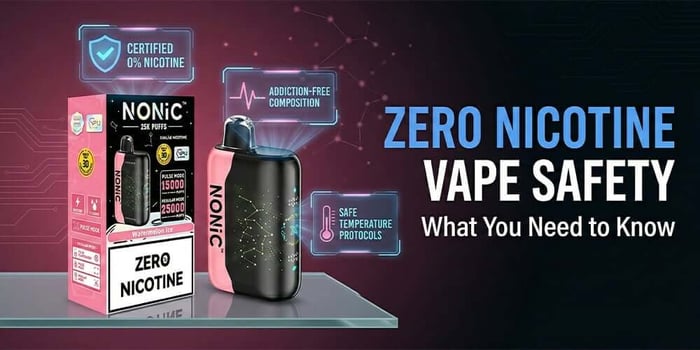
Quick Answer: Zero nicotine vape safety is higher than smoking or nicotine vaping because it removes addiction and nicotine-related heart risks, but it’s not completely risk-free. Users still inhale aerosolized ingredients like PG, VG, and flavorings, so choosing reputable brands and using devices responsibly is essential.
What Is a Zero Nicotine Vape?
A zero nicotine vape is a vaping device that contains e-liquid formulated without nicotine. These products can come in disposable, like the Cali UL8000, pod-based, or refillable systems. Instead of delivering nicotine, they focus entirely on flavor and vapor production.
The e-liquid in nicotine-free vapes typically contains:
- Propylene Glycol (PG)
- Vegetable Glycerin (VG)
- Food-grade flavorings
- Optional cooling agents
From a vape safety perspective, the absence of nicotine reduces addiction potential and removes stimulant-related effects like increased heart rate and blood pressure. However, the base ingredients still undergo heating and aerosolization, which introduces other considerations.
Why People Choose Zero Nicotine Vapes
There are several reasons adults turn to nicotine-free vaping:
- They want to quit nicotine but still enjoy the hand-to-mouth ritual.
- They enjoy flavors without dependence.
- They are stepping down from higher nicotine levels.
- They want a social alternative without addictive exposure.
For former smokers, switching to zero nicotine may be part of a gradual reduction strategy. For others, it’s purely recreational. Regardless of the reason, understanding vape safety is essential before assuming it’s completely harmless.
Zero Nicotine Vape Safety vs. Smoking
When comparing zero nicotine vaping to traditional combustible cigarettes, the difference is substantial.
Combustible cigarettes produce:
- Tar
- Carbon monoxide
- Thousands of combustion-related chemicals
- Dozens of known carcinogens
Zero nicotine vapes do not involve combustion. Instead, they heat liquid into vapor. That eliminates tar and significantly reduces toxic byproducts associated with burning tobacco.
From a harm-reduction standpoint, zero nicotine safety is considerably higher than cigarette smoking. However, “less harmful” does not equal “harmless.” Inhalation of heated aerosol still carries potential respiratory concerns.
Zero Nicotine Vape Safety vs. Nicotine Vaping
The key difference here is nicotine exposure.
Nicotine can:
- Increase heart rate and blood pressure
- Contribute to dependence and addiction
- Impact brain development in younger individuals
By removing nicotine, you eliminate the addictive component. This significantly improves zero nicotine vape safety in terms of dependence and long-term behavioral risk.
However, both nicotine and zero nicotine devices still produce vapor from heated PG, VG, and flavorings. That means respiratory considerations remain similar between the two.
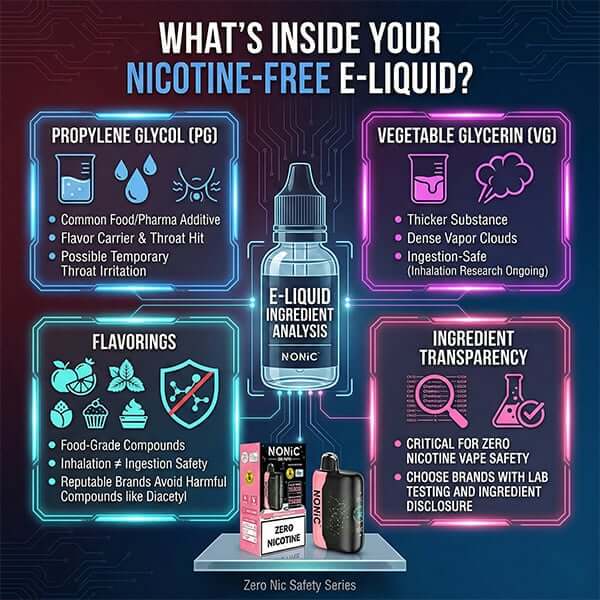
What Are the Ingredients in Nicotine-Free E-Liquid?
Propylene Glycol (PG)
PG is a common food and pharmaceutical additive. It produces throat hit and carries flavor well. When inhaled in vapor form, it may cause temporary throat irritation in some individuals.
Vegetable Glycerin (VG)
VG is thicker and produces dense vapor clouds. It’s generally recognized as safe for ingestion, but inhalation research is still ongoing.
Flavorings
Flavor compounds are typically food-grade, but inhalation safety isn’t always identical to ingestion safety. Certain compounds, like diacetyl, have raised concerns in the past, which is why reputable manufacturers now avoid them.
Understanding ingredient transparency is a critical part of zero nicotine safety. Always choose brands that provide lab testing and ingredient disclosure.
Are There Any Health Risks?
Research into long-term vaping, especially zero nicotine vaping, is still evolving. Current evidence suggests:
- Short-term respiratory irritation is possible.
- Some inflammatory responses may occur with heavy use.
- Long-term data is limited compared to decades of smoking research.
Importantly, removing nicotine eliminates addiction-related cycles that encourage frequent use. Lower frequency generally reduces exposure, which positively impacts zero nicotine vape safety outcomes.
Is Secondhand Vapor a Concern?
Secondhand exposure from zero nicotine vaping is significantly lower risk than secondhand cigarette smoke. There’s no sidestream smoke, no combustion, and no tar.
However, aerosol particles can still disperse in enclosed spaces. While current research indicates lower risk compared to tobacco smoke, practicing courtesy and following local regulations improves overall safety for everyone.
Regulations and Quality Control
Zero nicotine vape safety heavily depends on manufacturing standards. Poor-quality devices can introduce risks unrelated to ingredients.
Potential concerns include:
- Counterfeit or unregulated products
- Zero Nicotine Vape Battery malfunctions
- Contaminated e-liquids
To improve zero nicotine vape safety:
- Buy from reputable retailers.
- Avoid suspiciously cheap products.
- Check for lab testing documentation.
- Use devices according to manufacturer instructions.
Key Takeaway: Removing nicotine lowers addiction and heart-related risks, but zero nicotine vape safety still depends on quality ingredients, reliable devices, and responsible use. Moderation and reputable sourcing are key.
Can Zero Nicotine Vaping Help You Quit Nicotine?
For some adults, yes. Many users gradually reduce nicotine levels over time before transitioning to zero nicotine. This step-down strategy can reduce withdrawal severity while maintaining familiar rituals.
From a behavioral standpoint, zero nicotine vape safety includes the benefit of breaking chemical dependence while easing psychological habits. However, some individuals may continue habitual use even without nicotine, so intentional reduction remains important.
Common Myths About Zero Nicotine Vape Safety
Myth 1: It’s Just Water Vapor
It’s not. Vape aerosol contains PG, VG, flavor compounds, and trace heating byproducts, not just water.
Myth 2: No Nicotine Means No Risk
While addiction risk is removed, inhaling heated substances still carries potential respiratory effects.
Myth 3: All Zero Nicotine Vapes Are the Same
Quality varies widely. Lab-tested products from reputable brands are safer than counterfeit or black-market devices.
Who Should Avoid Zero Nicotine Vapes?
Even though zero nicotine vape safety is generally higher than smoking, certain individuals should avoid vaping entirely:
- Non-smokers who never used nicotine
- Pregnant individuals
- People with chronic lung disease
- Minors
Zero nicotine vaping is best viewed as a harm-reduction option for existing adult smokers, not a lifestyle product for non-users.
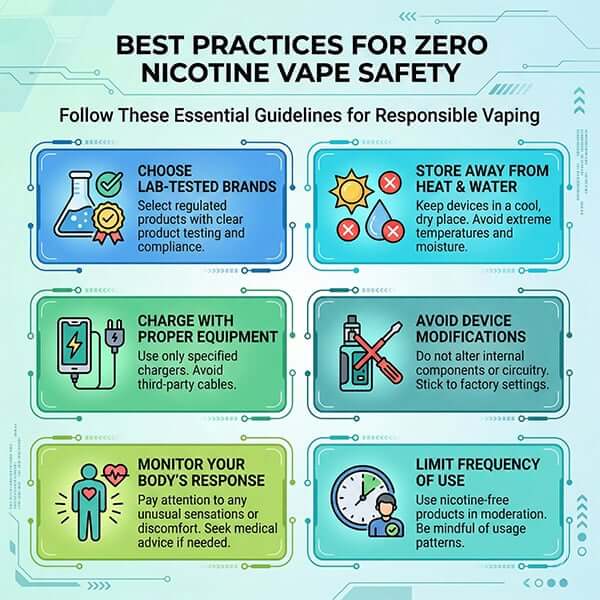
Best Practices for Zero Nicotine Vape Safety
If you choose to vape nicotine-free products, follow these guidelines:
- Choose regulated, lab-tested brands.
- Store devices away from heat and water.
- Charge batteries with proper equipment.
- Avoid modifying devices.
- Monitor how your body responds.
- Limit frequency of use.
Responsible behavior plays a major role in maximizing zero nicotine vape safety.
Long-Term Outlook: What Does the Research Say?
Long-term research is ongoing. Compared to smoking, vaping drastically reduces exposure to toxic substances from tobacco. However, since vaping is relatively new, decades-long outcome data is limited.
Public health organizations generally agree that vaping is less harmful than combustible tobacco but not risk-free. For individuals who never smoked, starting to vape—even without nicotine—is not recommended.
Is Zero Nicotine Vape Safety Enough to Make It “Safe”?
Safety exists on a spectrum. Compared to cigarettes, zero nicotine vaping dramatically reduces exposure to combustion-related toxins and eliminates addiction. Compared to breathing clean air, it introduces foreign substances into the lungs.
For adult smokers transitioning away from tobacco, zero nicotine vape safety represents a meaningful improvement. For non-smokers, abstaining entirely remains the safest option.
Final Thoughts on Zero Nicotine Vape Safety
Zero nicotine vape safety is often misunderstood. Removing nicotine eliminates addiction and stimulant-related cardiovascular stress, which is a major advantage. However, inhaling aerosolized PG, VG, and flavorings still carries potential respiratory considerations.
If you are an adult smoker looking to step down from nicotine, nicotine-free vaping may serve as a transitional tool. If you are a non-smoker, starting any inhaled product is unnecessary.
Ultimately, zero nicotine vape safety depends on three things: quality products, informed decisions, and responsible use. Stay educated, buy from reputable sources, and treat vaping as a harm-reduction strategy—not a harmless habit.
FAQs
Is zero nicotine vaping completely safe?
No, zero nicotine vaping is not completely safe. While it removes addiction and nicotine-related cardiovascular risks, users still inhale aerosolized ingredients like propylene glycol, vegetable glycerin, and flavorings, which may cause respiratory irritation.
Is zero nicotine vape safety better than smoking?
Yes. Zero nicotine vape safety is significantly better than smoking because it eliminates combustion, tar, and many harmful chemicals found in cigarettes. However, it is still not risk-free.
Can zero nicotine vapes damage your lungs?
Current research suggests zero nicotine vapes may cause mild respiratory irritation in some users, especially with heavy or frequent use. Long-term effects are still being studied.
Does vaping without nicotine cause addiction?
Zero nicotine vapes do not cause chemical nicotine addiction. However, users may still develop a behavioral habit due to the hand-to-mouth routine and flavor enjoyment.
How can I improve zero nicotine vape safety?
To improve zero nicotine vape safety, choose reputable, lab-tested brands, avoid counterfeit devices, follow manufacturer instructions, and limit how often you vape.