
Table of Contents
- What Is a Caffeine Vape, Exactly?
- Why Would Someone Inhale Caffeine Instead of Just Drinking Coffee?
- What Does the Science Actually Say?
- Who Are Caffeine Vapes Actually For?
- Caffeine Vape vs. Coffee vs. Energy Drink: How Do They Compare?
- The Safety Question: What Expert Critics Actually Said
- What to Look for When Buying a Caffeine Vape
- How to Use a Caffeine Vape Effectively
- The Bottom Line
- FAQs
You've probably seen them popping up, slim, disposable devices that claim to replace your morning coffee or afternoon energy drink with a few quick puffs. Caffeine vapes, also called caffeine diffusers or caffeine inhalers, are one of the fastest-growing categories in the functional inhaler space. And like any trending product, they come with both genuine appeal and legitimate skepticism.
This guide cuts through both. We'll explain how they work, what the evidence actually says, where the expert criticism is valid, and who they're genuinely right for, so you can decide without being sold to.
Quick Answer: Caffeine vapes are nicotine-free disposable devices that deliver caffeine through inhalation rather than digestion, promising faster energy than coffee or energy drinks. The physiological case for faster caffeine absorption through the lungs is plausible, but clinical evidence specific to inhaled caffeine is limited. They contain no nicotine, no tobacco, and no addictive compounds beyond caffeine itself, the same stimulant in your morning cup.
Key Takeaways
- Caffeine vapes are nicotine-free devices that deliver caffeine through inhalation
- The faster absorption claim is physiologically plausible, as lungs absorb compounds quickly
- Clinical trials specifically on inhaled caffeine are limited, though early evidence is promising
- Expert concerns center on lung health and unproven dosing; these deserve serious consideration
- They contain zero nicotine and are not addictive in the way tobacco products are
- They work best as a supplemental energy tool, not a replacement for proper sleep or nutrition
What Is a Caffeine Vape, Exactly?
Before anything else, let's clear up the terminology because it gets confused constantly.
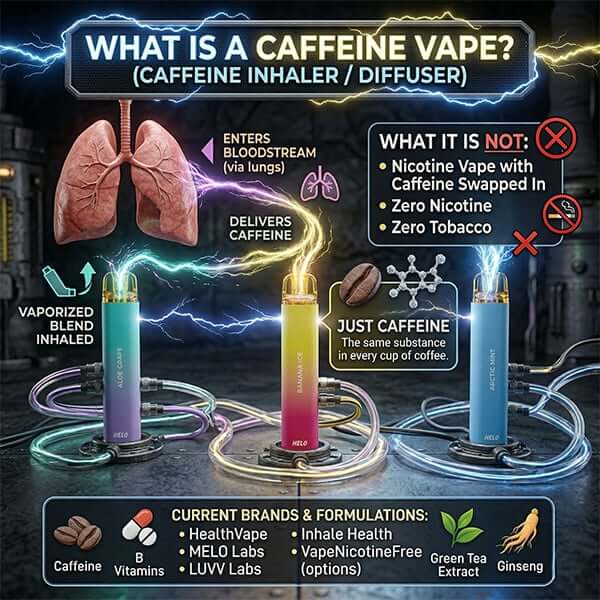
A caffeine vape, more accurately called a caffeine diffuser or caffeine inhaler, is a handheld device that vaporizes a liquid blend containing caffeine, typically combined with botanical extracts and flavoring. You inhale through the mouthpiece, the vapor delivers caffeine to your lungs, and from there it enters the bloodstream.
What it is not: a nicotine vape with caffeine swapped in. These products are purpose-built energy devices with zero nicotine, zero tobacco, and no addictive compounds beyond caffeine, the same substance in every cup of coffee on the planet. The hardware looks similar to a disposable vape pen, but the contents and intent are entirely different.
Current brands in this space include HealthVape, Inhale Health, MELO Labs, LUVV Labs, and the caffeine diffuser options carried at VapeNicotineFree. Each formulates slightly differently; some combine caffeine with B vitamins, others add green tea extract or ginseng for a broader energy profile.
Why Would Someone Inhale Caffeine Instead of Just Drinking Coffee?
A reasonable question. Coffee works. So what's the pitch here?
Speed is the primary argument. When you drink coffee or an energy drink, the caffeine travels through your digestive system before it reaches your bloodstream. That process takes 20 to 45 minutes, depending on your metabolism, what you've eaten, and how your body processes it on a given day. For someone who needs to be sharp in the next ten minutes, a presentation, a workout, an overnight shift, that delay matters.
Inhaled caffeine from a device like the HELO Plus Caffeine Disposable bypasses the digestive process entirely. Your lungs have a massive surface area and are biologically optimized for rapid compound transfer into the bloodstream. This is the same mechanism that makes inhaled medications like asthma inhalers work in seconds rather than minutes. Proponents argue you can feel the effect in under five minutes rather than half an hour.
Convenience is the second argument. No brewing, no mixing, no can to carry, no bathroom trips from 12 ounces of liquid. A slim caffeine diffuser fits in a pocket and delivers a dose in seconds. Calorie and sugar freedom rounds out the case; every caffeine vape delivers stimulation without the calories, sugar, or artificial sweeteners that come with most energy drinks.
What Does the Science Actually Say?
Here's where intellectual honesty is genuinely required, because the evidence picture for caffeine vapes is more nuanced than either fans or critics tend to admit.
The absorption mechanism is real. Inhaled compounds do reach the bloodstream faster through the lungs than through the gut. This is pharmacologically established. The question isn't whether the lungs can absorb caffeine; they can, it's whether the amount delivered in a typical diffuser reaches a meaningful concentration.
The caffeine content per puff is low. Most caffeine diffusers deliver somewhere between 2mg and 10mg of caffeine per session, depending on the device and how many draws you take. A standard cup of coffee contains 80 to 100mg. You would need a lot of puffs to match a single coffee, something manufacturers acknowledge by positioning these as a "boost" rather than a replacement.
Early human studies are cautiously promising. Research published in Psychopharmacology examined inhaled caffeine and found measurable increases in plasma caffeine levels and self-reported alertness. The effect was faster than oral caffeine, consistent with the absorption mechanism argument. However, the study was small, short-term, and did not involve the exact product formats on the market today.
The expert skepticism is legitimate and worth taking seriously. A College of American Pathologists report flagged that caffeine vapes claiming a "healthy energy boost" lack the clinical evidence to support that framing. Stanford Medicine researchers have raised broader concerns about habitually inhaling any substance beyond air. These are serious institutions making measured points, not anti-vape hysteria. Any honest review of caffeine vapes has to sit with that tension rather than dismiss it.
The most grounded framing: caffeine inhalers work for many users the way a small, fast-acting dose of caffeine would work, because that's what they are. The delivery is faster, the dose is smaller, and the long-term safety of the inhalation route for caffeine specifically is not yet fully established.
There is a specific study published on PubMed Central that we found pretty impressive, which was to investigate the effect of transpulmonary administration (which means vaporizer or diffuser) of caffeine on memory and brain functions. The study suggests that inhaling caffeine enhanced working memory and boosts alertness, offering a fast-acting stimulant effect.
Who Are Caffeine Vapes Actually For?
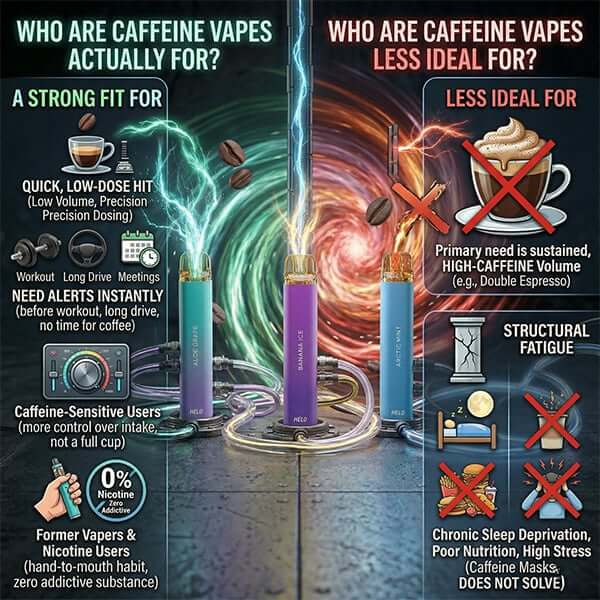
Not everyone reaches for an energy drink for the same reason. The profile of someone who genuinely benefits from a caffeine diffuser is fairly specific.
They're a strong fit if you need a quick, low-dose caffeine hit without the volume of a drink, before a workout, during a long drive, or between meetings when there's no time for a coffee run. They work well for people who are caffeine-sensitive and want more control over their intake than a full cup provides. They appeal strongly to former vapers or nicotine users who want something to hold and inhale without any addictive substance involved.
They're less ideal if your primary need is a sustained, high-caffeine boost; the dose per session simply doesn't compete with a double espresso for sheer caffeine volume. They're also not the right tool if your fatigue is structural. Chronic sleep deprivation, poor nutrition, or high stress aren't problems a caffeine inhaler can fix, regardless of how fast it absorbs.
Caffeine Vape vs. Coffee vs. Energy Drink: How Do They Compare?
| Feature | Caffeine Vape | Coffee | Energy Drink |
|---|---|---|---|
| Speed of onset | Fast (under 10 min) | Moderate (20–45 min) | Moderate (15–45 min) |
| Caffeine per session | Low (2–10mg typical) | High (80–100mg per cup) | High (80–200mg per can) |
| Calories | Zero | Near zero (black) | 10–220 depending on brand |
| Sugar | None | None (black) | Often high |
| Portability | Very high | Low | Moderate |
| Nicotine | None | None | None |
| Evidence base | Emerging | Very strong | Strong |
| Long-term safety | Under study | Well-established | Established for moderate use |
| Best for | Quick low-dose boost | Reliable sustained energy | High-caffeine on the go |
The comparison makes something clear that gets lost in the marketing: caffeine vapes are not coffee replacements. They're more accurately described as a fast-acting, low-dose caffeine tool that serves a different moment than a full cup does. Understanding that distinction upfront saves a lot of disappointment.
The Safety Question: What Expert Critics Actually Said
Two high-authority sources have raised concerns about caffeine vapes specifically, and they deserve direct engagement rather than a dismissive footnote.
The College of American Pathologists reported on caffeine vapes and noted that while brands claim to offer a "healthy energy boost," experts warned about the lack of clinical validation for these claims and the potential risks of habitually introducing any aerosolized substance into the lungs. The concern isn't that caffeine is dangerous, it's that the inhalation route for long-term daily use hasn't been studied sufficiently.
Stanford Medicine published a piece addressing the broader category of functional inhalers. The core concern was the same: inhaling substances not designed for pulmonary delivery introduces unknowns that don't exist with oral consumption. The lungs are more delicate than the digestive tract, more directly connected to systemic circulation, and more vulnerable to irritation from aerosolized particles.
What this means practically: caffeine vapes should be used with the same mindset you'd apply to any relatively new product with a plausible mechanism but a limited long-term track record. Occasional use for specific situations is a different risk profile than daily use as a coffee substitute. If you have asthma, reactive airway disease, or any respiratory condition, the conversation starts with your doctor, not a product page.
It does not mean these products are inherently dangerous. Caffeine is one of the most studied compounds in human pharmacology. Zero nicotine means zero tobacco addiction risk. But being honest about the limits of current evidence is what separates a trustworthy guide from a sales pitch.
What to Look for When Buying a Caffeine Vape
Caffeine source and concentration. Look for products that list the caffeine content clearly, both per puff and per device. Pharmaceutical-grade caffeine or natural caffeine from green tea or coffee extract is preferable to ambiguously labeled "proprietary blends."
No nicotine, confirmed. Every caffeine diffuser should be explicitly 0mg nicotine. Don't assume; verify it on the product page before purchasing. Reputable brands make this prominent.
Clean additional ingredients. The best caffeine diffusers keep the formula straightforward: caffeine, a VG/PG base, and natural flavoring. Watch for unnecessary additives, synthetic sweeteners, or undisclosed botanical extracts with no safety data.
Puff count and total caffeine delivery. Know how many puffs you're getting and what that means for your total caffeine intake. A device with 200 puffs at 2mg per puff delivers 400mg of caffeine total, roughly four cups of coffee spread across the device's lifespan.
Brand transparency. Brands that publish full ingredient lists, third-party testing results, or clear manufacturing standards are the ones worth buying from. This is a young category, and product quality varies significantly.
How to Use a Caffeine Vape Effectively
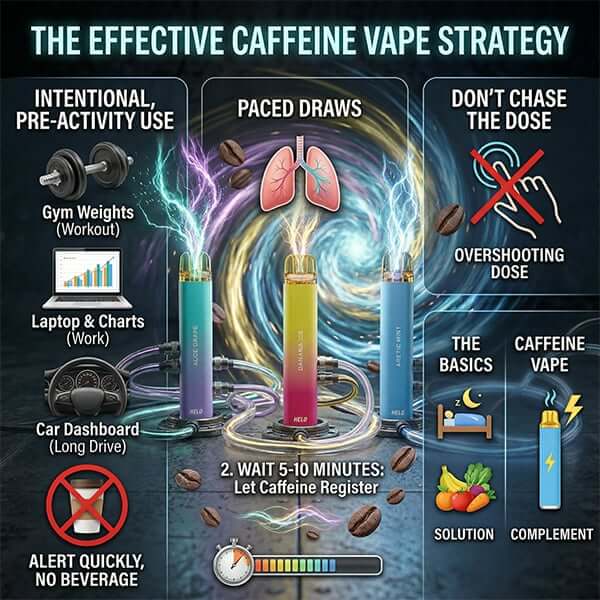
A caffeine diffuser performs best when used intentionally rather than habitually.
The sweet spot is pre-activity use, before a workout, before a demanding work session, before a long drive, when you need to be alert quickly and don't have access to a beverage. Take three to five slow, steady draws and give the caffeine five to ten minutes to register before deciding you need more.
Don't chase the dose. The low caffeine content per puff is a feature for some users, precision dosing without the risk of overdoing it, but it requires patience. Rapid-fire puffing because you don't feel it immediately is how you overshoot what your body needs.
Use it as a complement to, not a replacement for, real sleep and nutrition. Caffeine in any format is a stimulant that masks fatigue, not a solution to it. The most effective caffeine strategy is one that supports your energy without substituting for the basics.
The Bottom Line
Caffeine vapes occupy a real and defensible niche; they're not a gimmick, but they're not a revolution either. For specific situations where you need a fast, light caffeine hit without the volume of a drink, they deliver. For replacing your morning coffee or powering through an all-nighter on caffeine alone, they fall short on dose.
The expert skepticism about the inhalation route is worth taking seriously. These products are relatively new; the long-term safety data for regular use doesn't exist yet, and anyone positioning a caffeine inhaler as categorically "healthy" is overstating what we currently know. Occasional, intentional use is a different conversation than making one your daily caffeine source.
The products we carry at VapeNicotineFree are selected for ingredient transparency, confirmed zero nicotine, and clear caffeine content labeling. If a caffeine diffuser fits your routine, browse what we have in stock.
Shop Caffeine Diffusers at VapeNicotineFree →
Sources
- College of American Pathologists Newsroom. Caffeine Vapes Costing $30 Claim to Give a 'Healthy' Energy Boost — But Experts Warn They Could Scar. cap.org
- Stanford Medicine News. Yuck! Don't Vape That. med.stanford.edu, 2022.
- Psychopharmacology Journal. Study on inhaled caffeine absorption and alertness effects.
- Southwest Council on Alcohol and Drug Dependence. Caffeine Vapes. southwestcouncil.org
- National Institutes of Health. Caffeine. ods.od.nih.gov
- Ahrefs Keyword Research Data. Caffeine Vape SERP Analysis. April 2026.
This article is for informational purposes only and does not constitute medical advice. Caffeine diffusers are not FDA-approved medical devices. If you have a respiratory condition or are pregnant or nursing, consult a healthcare provider before use.
FAQs
Do caffeine vapes actually work?
For many users, yes — they deliver a noticeable, fast-acting energy boost. The physiological mechanism is sound: the lungs absorb compounds into the bloodstream faster than the digestive system. The caffeine content per session is lower than a cup of coffee, so they work best as a quick, targeted boost rather than a high-caffeine replacement.
Are caffeine vapes safe?
They contain no nicotine and no tobacco. Caffeine itself is one of the most studied compounds in human health. The open question is the long-term safety of the inhalation route for caffeine specifically — this hasn't been fully established. Experts from Stanford Medicine and the College of American Pathologists have flagged the lack of long-term safety data. Occasional use presents a different risk profile than daily habitual use.
How much caffeine is in a caffeine vape?
This varies significantly by brand and device. Most deliver approximately 2mg to 10mg of caffeine per session — considerably less than a standard cup of coffee (80 to 100mg). Understanding the per-puff content is important when evaluating whether a product will meet your needs.
Are caffeine vapes addictive?
Caffeine itself carries a mild physical dependence when consumed regularly — the same dependence you develop with daily coffee. Caffeine vapes contain zero nicotine and carry none of the serious addiction risks associated with tobacco products. The dependence risk is comparable to regular coffee consumption, not cigarettes.
Can I use a caffeine vape instead of coffee?
For a quick, low-dose boost, yes. As a full caffeine replacement for someone who drinks two or three cups a day, the math doesn't work — the per-session caffeine content is too low. Think of it as a fast-acting supplement rather than a beverage substitute.
Are caffeine vapes legal?
Yes, in the United States. Caffeine is an unregulated food ingredient, and zero-nicotine caffeine diffusers are not classified as tobacco products. Standard age verification applies at purchase per retailer policy.
Who should avoid caffeine vapes?
Anyone with asthma, reactive airway disease, or other respiratory conditions should consult a doctor before using any inhalation product. People who are pregnant or nursing should avoid caffeine vapes. Those who are highly sensitive to caffeine should start with a single puff and assess tolerance before continuing.