
Table of Contents
- What Are the Main Ingredients in a Nicotine-Free Vape?
- Does the VG-to-PG Ratio Actually Matter?
- What About Flavor Ingredients? Here's What to Actually Look For
- Common Myths About Nicotine-Free Vape Ingredients
- What Makes a Quality Nicotine-Free Vape Stand Out?
- So, What's Actually in Your Nicotine-Free Vape?
- FAQs
Quick Answer: Nicotine-free vapes typically contain three core ingredients: vegetable glycerin (VG), propylene glycol (PG), and food-grade flavorings. Some formulas also include distilled water and plant-based extracts, depending on the device. There is no nicotine, no tobacco, and no tar in any zero-nicotine vape product.
Key Takeaways
- The base of virtually every nicotine-free vape liquid is vegetable glycerin (VG) and propylene glycol (PG), both widely used in food and pharmaceutical products.
- Food-grade flavorings are what give zero-nicotine disposables their fruit, mint, or dessert profiles, and quality brands use ingredients approved for inhalation use.
- No tobacco, no nicotine, and no tar are present in any nicotine-free vape product, period.
- The VG-to-PG ratio directly affects vapor density and throat feel, so understanding it helps you pick the right device for your preference.
- Reading the ingredient label (or asking us) before you buy is always the smartest move, especially if you have known sensitivities to PG.
Most people grab a vape and never think twice about what's actually in it. That's totally understandable, but if you've ever turned a disposable over looking for an ingredient list and found nothing useful printed on the side, you're not alone. Nicotine-free vape ingredients tend to be straightforward, but there's enough misinformation floating around online that we figured a clear, honest breakdown was long overdue. Here at vapenicotinefree.com, we handle these products every single day, and we're genuinely happy to pull back the curtain.
What Are the Main Ingredients in a Nicotine-Free Vape?
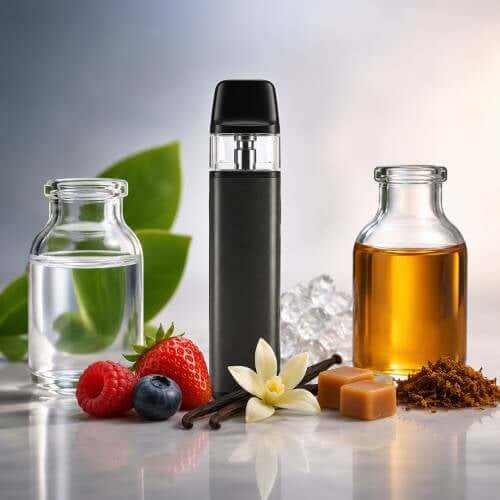
The formula inside a zero-nicotine disposable or pod system is actually pretty simple. Most e-liquids, whether they contain nicotine or not, are built on the same two-ingredient base: vegetable glycerin and propylene glycol. Everything else, the flavors, the water, the occasional botanical extract, is layered on top of that foundation.
Vegetable Glycerin (VG)
VG is a thick, slightly sweet, plant-derived liquid that makes up the bulk of most e-liquid formulas. It's responsible for those big, dense vapor clouds you see with higher-wattage devices. You'll find VG used in everything from food production to cosmetics, and it's Generally Recognized as Safe (GRAS) by the FDA for oral consumption. In vaping, high-VG blends, typically 70% VG or more, tend to produce a smoother, softer experience on the inhale.
Propylene Glycol (PG)
PG is a thinner, odorless liquid that acts as a carrier for flavorings and gives you that slight sensation in the back of the throat on each puff. It absorbs flavor compounds better than VG, which is why it's such a standard part of the mix. PG is found in a huge range of everyday products including asthma inhalers, food coloring, and certain pharmaceuticals. A small number of people do have a sensitivity to it, so if you've ever noticed minor throat irritation from vaping, a high-VG or VG-only blend might be worth trying.
Food-Grade Flavorings
This is where things get more varied. The flavorings used in e-liquids range from natural extracts to synthetic compounds, and the quality can differ a lot by brand. Reputable manufacturers use flavorings that have been evaluated for inhalation use, not just for ingestion, since the respiratory system interacts with compounds differently than the digestive system does. This is something worth paying attention to when you're comparing brands.
| Ingredient | Role in the Vape | Common Uses Outside Vaping |
|---|---|---|
| Vegetable Glycerin (VG) | Creates vapor, provides smoothness | Food sweetener, cosmetics, soap |
| Propylene Glycol (PG) | Carries flavor, adds throat feel | Food coloring, asthma inhalers, pharma |
| Food-Grade Flavorings | Provides the taste profile | Candy, beverages, baked goods |
| Distilled Water | Thins the mix for coil compatibility | Lab use, medical equipment, cooking |
| Plant/Herbal Extracts | Added in certain specialty blends | Supplements, teas, aromatherapy |
Does the VG-to-PG Ratio Actually Matter?
Short answer: yes, more than most people realize. The ratio of VG to PG in a formula directly shapes how a device feels to use, how strong the flavor comes through, and how much vapor it produces. Once you understand this, choosing between products gets a lot easier.
A higher VG ratio, say 80/20 or even full-VG, gives you denser clouds and a smoother inhale. It's popular in sub-ohm devices and direct-lung style vapes. The tradeoff is that VG is viscous, so it's harder on the coil long-term and it can slightly mute delicate flavors.
A higher PG ratio does the opposite. Thinner liquid, sharper flavor delivery, and a more defined sensation in the throat. This is closer to what traditional smokers often prefer when they first make the switch to vaping. Most modern disposables and pod systems sit somewhere in a balanced 50/50 to 70/30 VG-PG range because it's a solid middle ground for flavor clarity and vapor production at the same time.
VNF Pro Tip: If you run through vapes quickly and notice the flavor fading before the device runs out, you might be using a high-PG device with a coil that burns too hot. Try a 70/30 VG-PG blend or a device specifically designed for higher-viscosity liquids. We see this question come up constantly in our customer messages, and switching the ratio fixes it almost every time.
What About Flavor Ingredients? Here's What to Actually Look For
Flavorings are where the ingredient conversation gets the most nuanced. Most are food-safe compounds that have been used in the food and beverage industry for decades. But "safe to eat" and "safe to inhale" are not automatically the same standard, and that distinction matters.
The vaping industry has largely moved away from certain known problematic compounds. Diacetyl, a buttery flavoring linked to respiratory issues when inhaled in industrial quantities, was common in older e-liquid formulas but has been phased out by responsible manufacturers. Acetyl propionyl (a similar compound sometimes used as a diacetyl substitute) is also on the radar. Brands that are serious about quality get their e-liquids tested and can provide Certificates of Analysis (COAs) confirming diacetyl-free formulas.
Natural vs. Artificial Flavorings
You'll sometimes see "natural flavors" listed on a label versus "artificial flavors." In the vaping world, this distinction is less clear-cut than it sounds. Natural flavors can still involve complex chemical extraction processes, and artificial flavors aren't automatically worse. What matters more is whether the specific compounds used have been evaluated for inhalation safety, not just food-grade classification. Brands that are transparent about this tend to publish their lab results, and we always recommend looking for that level of accountability.
Fruit, Mint, and Dessert Profiles
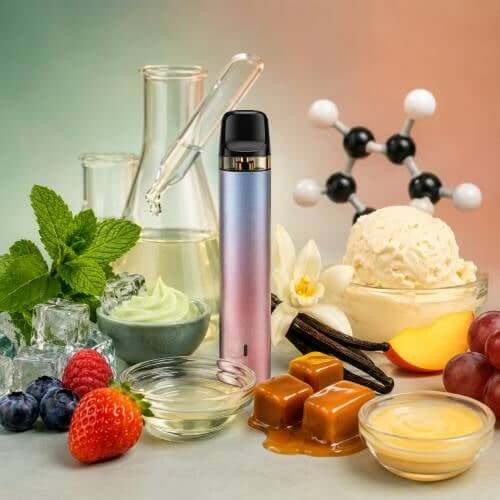
The flavor categories themselves don't tell you much about ingredient quality, but they do hint at the flavor compound families involved. Mint and menthol profiles typically use well-studied compounds with a long history of safe use. Fruit profiles rely on esters (organic compounds responsible for characteristic fruity aromas), while dessert flavors involve more complex combinations including vanilla, caramel, and cream-type compounds. All of these exist across quality spectrums, so brand reputation and testing transparency remain the best guides.
Common Myths About Nicotine-Free Vape Ingredients
There's a lot of noise online about what's in vapes, and not all of it is accurate. A few myths keep circulating that are worth clearing up directly.
- Myth "Nicotine-free vapes still contain tobacco." They don't. Zero-nicotine e-liquids are entirely tobacco-free. The base ingredients are VG, PG, and flavorings, none of which are derived from tobacco plants.
- Myth "The vapor is just water vapor." It's not quite water vapor. The aerosol produced by vaping is a suspension of fine liquid particles, mostly VG and PG droplets, which is different in composition from pure water steam.
- Myth "All vape flavors use the same base ingredients." Not true. While VG and PG are standard, the specific flavoring compounds vary significantly between brands and flavor profiles. Budget brands and premium brands are not the same product.
- Myth "If it's nicotine-free, the ingredients don't matter." They absolutely do. The quality of flavorings, the sourcing of VG and PG, and the manufacturing standards all affect what you're actually inhaling. Ingredient quality matters regardless of nicotine content.
We get asked about this stuff regularly. Honestly, the customers who ask the most questions about ingredients are usually the ones who stick with quality products long-term, which makes sense. Knowing what you're putting in your body is just good practice.
What Makes a Quality Nicotine-Free Vape Stand Out?
After carrying dozens of brands here at vapenicotinefree.com, we've developed a pretty clear picture of what separates a well-made device from a mediocre one, and it almost always comes down to the liquid quality and the hardware it's paired with.
Take the ARRO Ultra 15K Zero Nicotine Disposable as a concrete example. It delivers up to 15,000 puffs, which means the liquid volume and coil quality both have to be on point to hold up over that many uses without flavor degradation. Devices in this performance category use higher-grade VG-PG blends and tightly controlled flavoring concentrations, because a well-tuned ratio keeps the flavor consistent from the first puff to the last. Cheap devices often front-load flavor intensity and then trail off badly as the coil saturates. A quality build avoids that entirely.
Pharmaceutical-Grade VG & PG
Top-tier brands use USP (United States Pharmacopeia) grade VG and PG, the same purity standard used in medicines and food production. Lower grades can introduce trace contaminants.
Inhalation-Tested Flavors
Food-safe doesn't automatically mean inhalation-safe. Quality brands work with flavorings specifically evaluated for vaping applications and provide third-party lab verification.
Diacetyl-Free Certification
Any brand worth trusting can confirm their formulas are diacetyl-free. This is a non-negotiable quality indicator, especially for creamy or buttery flavor profiles.
Consistent Coil + Liquid Matching
The best devices pair their VG-PG ratio to the coil's resistance and wattage output, so the liquid vaporizes cleanly without burning or flooding the chamber.
VNF Pro Tip: If you ever want to check a brand's ingredient standards, the easiest thing to do is look for a published Certificate of Analysis on their website, or ask the retailer directly. Here at Vape Nicotine Free, we vet the brands we carry, and we're happy to tell you everything we know about any product on the shelf. No runaround, no scripted answers.
So, What's Actually in Your Nicotine-Free Vape?
Nicotine-free vape ingredients, at their core, are vegetable glycerin, propylene glycol, and food-grade flavorings. That's it. The difference between a good vaping experience and a forgettable one comes down to the quality of those ingredients, the ratio they're combined in, and whether the device is built to handle them properly. No smoke, no tar, no tobacco, and when you choose a reputable brand, no mystery.
Knowing what goes into your vape puts you in a much stronger position as a buyer. You can ask better questions, compare products with more confidence, and spot a low-quality device before you waste money on it. That's exactly why we put together guides like this one here at vapenicotinefree.com, because an informed customer is a happy customer, and happy customers are the ones who come back.
If you're ready to browse products you can feel good about, check out our full range of zero nicotine disposable vapes and find something that matches exactly what you're looking for.
Shop Zero-Nicotine Vapes You Can Trust
Every device we carry is handpicked for quality ingredients, consistent performance, and real flavor. Browse the full collection and find your next favorite.
Browse All Zero Nicotine VapesFAQs
Are the ingredients in nicotine-free vapes the same as in regular vapes?
The base ingredients are largely the same: vegetable glycerin (VG), propylene glycol (PG), and food-grade flavorings. The key difference is the absence of nicotine in zero-nicotine formulas. Some nicotine vapes also include nicotine salts or freebase nicotine compounds, which alter the throat sensation and absorption. Without those, nicotine-free e-liquids tend to feel smoother on the inhale, especially at higher VG ratios. The quality of the remaining ingredients still varies significantly by brand, so it's worth paying attention to sourcing and lab testing regardless of nicotine content.
Is propylene glycol in vapes the same as antifreeze?
This one comes up a lot, and the short answer is no. Propylene glycol (PG) is sometimes confused with ethylene glycol, which is the compound used in automotive antifreeze. They are chemically different substances. PG is classified as Generally Recognized as Safe (GRAS) by the FDA and is used in a wide range of food, pharmaceutical, and cosmetic products, including asthma inhalers, salad dressings, and oral medications. It has a well-established safety profile for use in consumer products. Ethylene glycol, by contrast, is toxic and is not used in food or pharmaceutical applications.
Can I be allergic to something in a nicotine-free vape?
Yes, it's possible, though it's not common. The most frequently reported sensitivity is to propylene glycol. People with a PG sensitivity may notice throat irritation, dry mouth, or minor skin reactions around the lips and mouth. If you've experienced something similar, switching to a high-VG or VG-only blend is usually the fix. Specific flavorings can also occasionally cause reactions, particularly in people with known food sensitivities to certain fruit or botanical compounds. If you're unsure, starting with a simple flavor profile rather than a complex one is a reasonable way to test the waters. And if symptoms persist, checking in with a healthcare provider is always the right call.
How do I know if a nicotine-free vape uses quality ingredients?
The clearest indicator is third-party lab testing. Reputable brands publish Certificates of Analysis (COAs) that confirm what's in the formula and verify it's free from substances like diacetyl. Beyond that, look for brands that specify USP-grade (United States Pharmacopeia) VG and PG, which is the same purity standard used in medicines and food production. Transparent ingredient labeling and a clearly listed manufacturer are also good signs. Here at vapenicotinefree.com, we only carry brands we've vetted ourselves, and we're always happy to answer questions about any specific product in our collection before you buy.
Do nicotine-free vapes have fewer ingredients than nicotine vapes?
Generally, yes. A standard nicotine-free e-liquid contains VG, PG, and flavorings. Some include a small amount of distilled water to adjust viscosity, and certain specialty blends add botanical or herbal extracts. Nicotine-containing formulas add nicotine (in either freebase or salt form) and sometimes additional buffering agents to adjust pH for a smoother throat hit. So by ingredient count, zero-nicotine formulas are typically simpler. That said, simpler doesn't automatically mean better or worse; the quality of each ingredient still matters more than the total number of them.