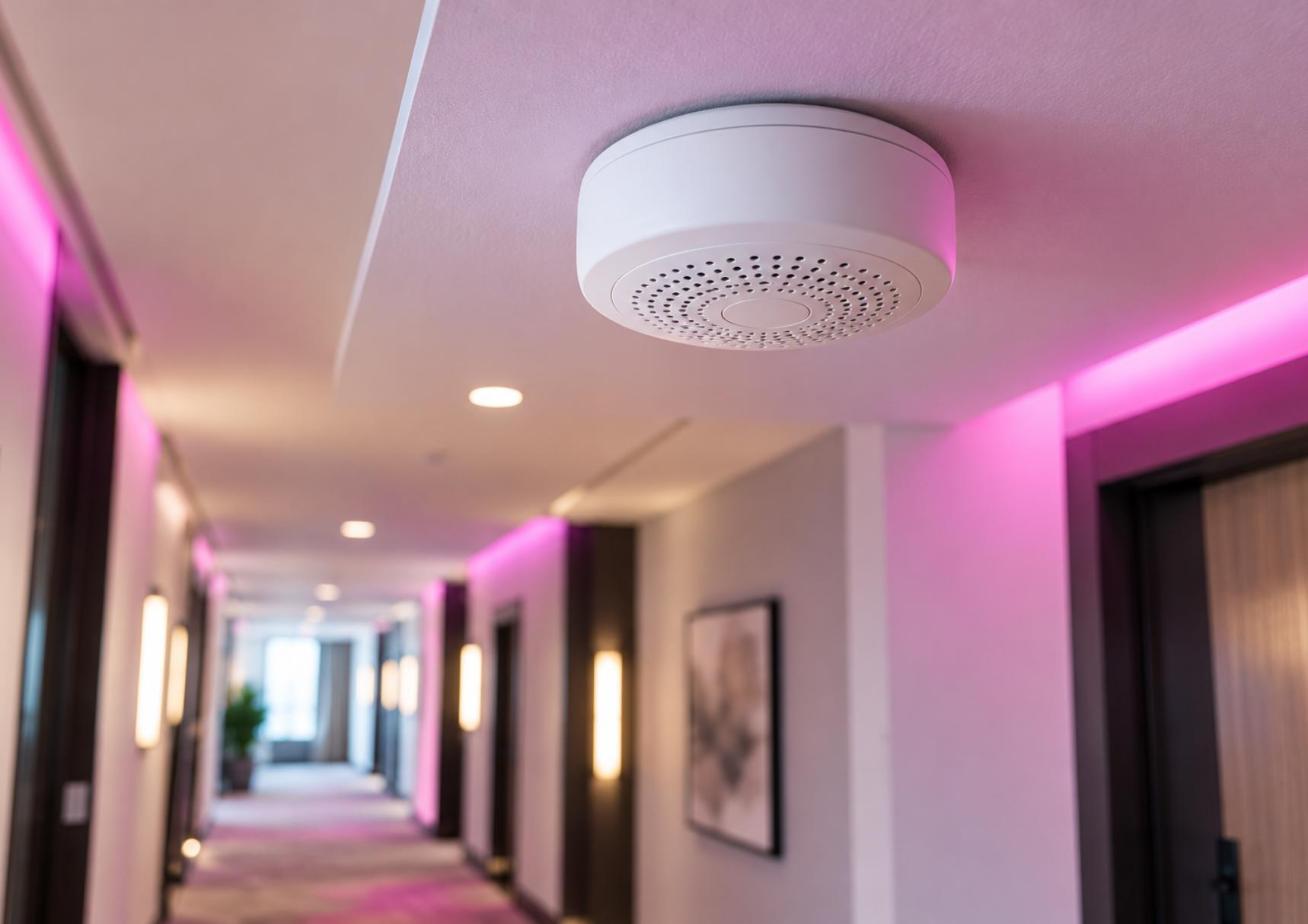
Vape Detectors: How They Work and Whether They Sense 0% Vapes
Quick answer
Vape detectors are air quality sensors that look for the aerosol particles and gases vaping releases, not nicotine alone. Most use laser particle sensing, gas or VOC sensors, or both, and alert staff when readings jump above normal. Because a zero nicotine vape still makes aerosol, it can set one off. The best approach is simple: follow the posted policy wherever you are.
Vape detectors are showing up in more hotels, offices, and rentals, and we get a steady stream of questions about them. Here at Vape Nicotine Free we sell zero nicotine disposables to adults 21+, and our position is straightforward: if a space bans vaping, that includes 0% devices. This guide explains how the technology works, where adults are likely to encounter it, and what that means for anyone using a nicotine-free vape.
2 to 3
Common sensor approaches: particulate, gas or VOC, and combination units.
1 to 10 μm
Particle size range one major detector maker says its sensor monitors.
0%
Nicotine content does not stop aerosol from being detected.
2016
Year the U.S. DOT finalized its ban on e-cigarette use on commercial flights.
How do vape detectors work?
Vape detectors compare the air in a room against a normal baseline and send an alert when certain readings spike. They are closer to smart smoke alarms than to drug tests.
According to a vape detector guide from security company Avigilon, detectors generally rely on three approaches. Particulate sensors use laser scattering to spot aerosol particles. Gas sensors detect specific gases by measuring changes in electrical resistance or infrared absorption. Combination units blend both with other sensors such as temperature.
The maker of the HALO Smart Sensor, one widely used model, says on its official site that its device monitors airborne particles in the 1 to 10 μm range plus gases including carbon dioxide, carbon monoxide, nitrogen dioxide, ammonia, and volatile organic compounds (VOCs). Readings are sent to staff dashboards or phones, and some setups also trigger a local alarm.
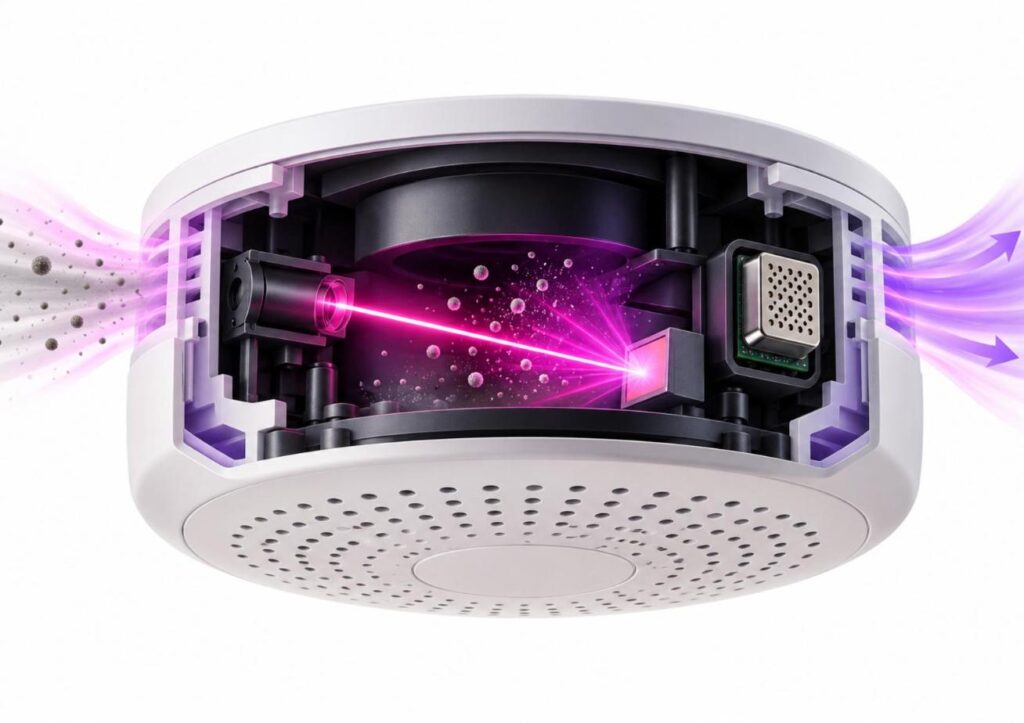
Vape detector sensor types compared
| Sensor type | What it reads | Reacts to 0% aerosol? | Common false triggers |
|---|---|---|---|
| Particulate (laser) | Tiny airborne particles | Likely, since it reads particles, not nicotine | Steam, aerosol sprays, dust |
| Gas or VOC | Changes in specific gases and organic compounds | Possibly, depending on the liquid and thresholds | Cleaning product fumes, strong fragrances |
| Combination | Particles plus gases and other signals | Likely | Varies by settings and placement |
Do vape detectors detect nicotine free vapes?
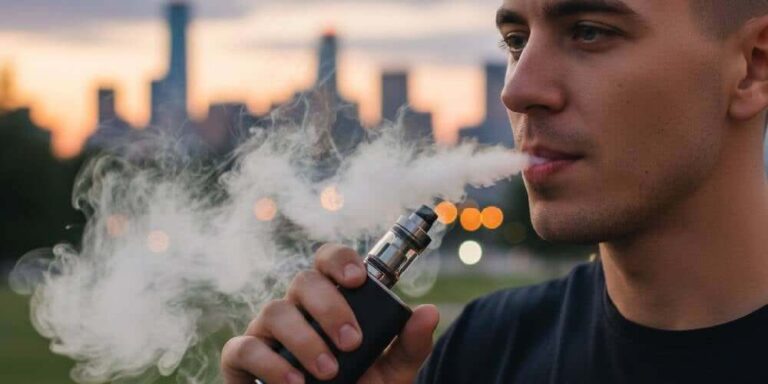
In most cases, yes, they can. The sensors respond to the aerosol cloud and the compounds in it, and a 0% vape still produces aerosol.
A zero nicotine e-liquid uses the same base as a nicotine liquid, typically propylene glycol, vegetable glycerin, and flavorings, as the FDA describes for e-liquids generally. Our breakdown of what’s in your vape goes deeper. The CDC notes that e-cigarette aerosol contains tiny particles and volatile organic compounds, which are exactly what particulate and VOC sensors are built to notice.
The American Lung Association also summarizes the 2016 Surgeon General finding that secondhand e-cigarette emissions contain ultrafine particles, flavorings, and volatile organic compounds. In other words, removing nicotine does not make the aerosol invisible to a sensor, and the people sharing that air did not opt in.
Our take: We do not offer tips for avoiding detection, and we do not recommend trying. A 0% device is still a vaping device under most building rules, so treat a no-vaping sign the same way you would a no-smoking sign.
Vape where it is allowed, with 0 mg nicotine
Our zero nicotine disposables are for adults 21+ who want flavor without nicotine. Orders over $100 ship free, and buy 2 to save 10% or 3+ to save 15%.
Shop zero nicotine vapesWhere adults encounter vape detectors
Most adults run into vape detectors in shared or rented spaces where the owner wants to protect air quality and furnishings. Expect them anywhere smoking is already banned.
- Hotels and short-term rentals: HALO lists hotel rooms and restrooms among its use cases, and many properties pair a no-vaping policy with cleaning fees.
- Offices and shared workspaces: Detectors are marketed for workplaces and shared office areas.
- Hospitals and residential buildings: HALO also lists patient rooms, dorm rooms, and other shared living spaces.
- Retail and public buildings: Avigilon lists retail stores, restaurants, malls, libraries, and transit centers.
- Airplanes: Separate from any sensor, the U.S. Department of Transportation banned e-cigarette use on all scheduled flights to, from, and within the U.S. in 2016.
Schools also use these devices, but our products and this article are strictly for adults 21+. For travel rules, see our guide to traveling with 0% vapes, and for hotel stays, read our notes on zero nicotine disposables and hotel rooms before you check in.
What happens when a vape detector goes off?
Usually, a notification goes to staff rather than a siren blaring in the hallway. What happens next depends on the property, not the device.
Avigilon explains that detectors compare readings to normal air quality and send an alert once a threshold is crossed, and that some models can also sound an audible alarm. HALO says its system reports events to an online dashboard with a map showing where readings spiked. From there, a hotel, landlord, or employer applies its own rules, which can range from a reminder to fees spelled out in a booking or lease agreement. The device does not know or care whether the liquid had nicotine in it; it only knows the air changed.
That is the practical reason we tell customers to treat a vape detector the same way they would a smoke alarm: as a sign that vaping is not allowed in that space.
Hotel vape detectors and your privacy
Most vape detectors measure air, not people. Manufacturers market them for places where cameras are not allowed.
HALO describes its device as camera-free and says it provides monitoring without video or audio recording, though it does monitor sound levels and can listen for preset keyword phrases. Avigilon notes that some installations connect detectors to separate camera or sound systems. If privacy matters to you, ask the property what is installed and how alerts are handled.

Vape detectors by the numbers
12 x 12 ft
Approximate area one detector covers, according to Avigilon’s guide.
100,000+
Buildings HALO says use its sensor worldwide.
5+
Gases HALO lists, including CO2, CO, NO2, ammonia, and VOCs.
All
Scheduled U.S. flights covered by the DOT e-cigarette use ban.
How to stay on the right side of vaping rules
- Read the policy first. Check the hotel, rental, or office rules before you arrive, not after.
- Assume 0% counts. Most policies say vaping, not nicotine vaping.
- Use designated areas. Step outside to a permitted spot, away from doors and windows.
- Know local law. Some states and cities regulate where and how you can vape; our zero nicotine vape laws guide covers the basics.
- Pack properly when traveling. Keep devices in carry-on bags and follow airline rules.
Compact 0% picks for designated areas
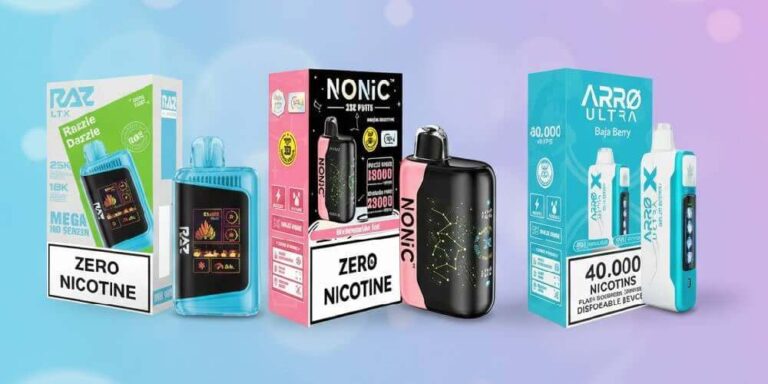
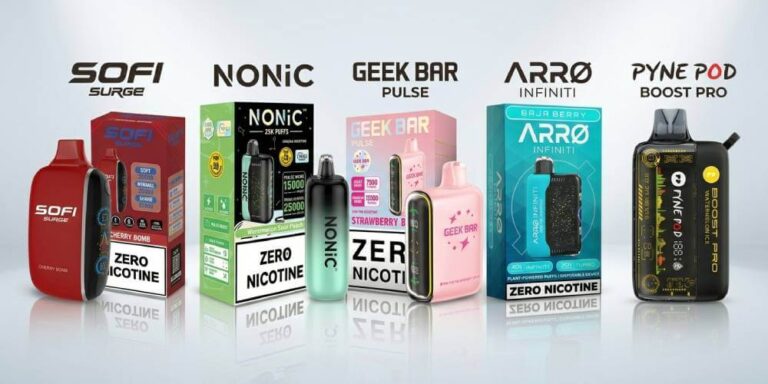
If you vape outdoors or in permitted areas, a small, simple device is easy to carry. All three contain 0 mg nicotine.
Stock up on 0% flavors
Browse every zero nicotine disposable we carry. Free shipping over $100, and multi-device discounts apply automatically in cart.
Browse 0% disposablesFrequently asked questions
Do vape detectors detect nicotine?
Most vape detectors do not test for nicotine itself. They look for aerosol particles and gases that vaping releases, so they react to the cloud rather than its nicotine content.
Can a zero nicotine vape set off a vape detector?
Yes, it can. A 0% vape still produces aerosol with particles and organic compounds, which particulate and VOC sensors are designed to sense.
Do hotels have vape detectors?
Some do. Detector makers market their sensors for hotel rooms and restrooms, and many hotels pair no-vaping policies with cleaning fees. Check the property policy before you vape.
Do vape detectors record audio or video?
HALO says its device is camera-free and does not record video or audio, though it monitors sound levels. Some installations link detectors to separate camera systems, so ask the property.
Can steam or spray trigger a vape detector?
Yes. Avigilon notes that steam, aerosol sprays, cleaning fumes, and dust can trigger some detectors, which is why placement and settings matter.
Sources
- Avigilon: Vape Detectors Guide
- HALO Smart Sensor: Official product site
- U.S. Department of Transportation: Explicit Ban on E-Cigarette Use on Commercial Flights (2016)
- American Lung Association: What is Secondhand Aerosol from E-Cigarettes?
- CDC: About E-Cigarettes (Vapes) (2024)
- FDA: E-Cigarettes, Vapes, and other Electronic Nicotine Delivery Systems (ENDS)
For adults 21+ only. This article is for general information and is not medical advice. Zero nicotine vapes contain no nicotine, but they are not risk-free; talk with a healthcare provider about your health questions.